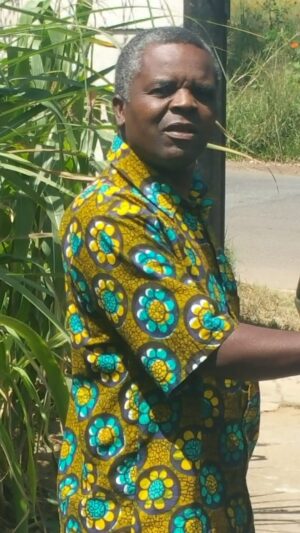
 Professor William Lungisani Chigidi is one of the illustrious academics and writers to ever emerge in the post-independence Zimbabwean literary landscape. His works are memorable especially to a generation of Zimbabwean students who studied literature in the late eighties or thereabouts. His academic writings particularly in indigenous knowledge systems, African oral and written literature, culture, etc., have been published in different local and international journals. He is currently with the Midlands State University in the Department of Applied Education. In this conversation with literary journalist Beaven Tapureta (BT), Professor Chigidi shares insightful thoughts on his own writing journey and various aspects of the Zimbabwean playwriting or theatre world.
BT: Welcome, Prof William Chigidi. It’s been long time since we heard about your new writings; you seem to have gone quiet, especially with plays, what’s happening?
Thank you for welcoming me. A lot is happening. Of course my last play was published in 2011 and since then nothing in that area is happening. But a lot is happening in other areas. I have been focusing more on academic writing and I think I am doing well there. Playwriting is a function of artistic and creative abilities. When those abilities are on holiday there is artistic and creative drought.
BT: Some writers who are also academics like you have abandoned writing stories, poems or plays because they say these forms no longer pay and now they prefer academic papers. What does this mean to you?
It’s a very sad development. The ideal thing would be for both academic writing and creative writing to flourish. In other words, it would be good for those who are gifted to flourish in both areas for the benefit of society. Unfortunately, most people feel it’s no longer worth it to spent time and resources on writing poems, novels, plays and short stories because they know there are ‘thieves’ out there waiting to steal their works and make money out of them. Once your book is published it will find its way onto the digital platforms and no one will buy your hard copies from the shops. I have specific examples of what I am talking about. About 3 years ago one of my plays Mhosva Ndeyako was made a set book at a local university. One student borrowed my personal copy of the book and the next thing is that the play was scanned and made available online for everyone in the class to read. Again the A-level students who wrote their final Shona literature exams in 2025 were studying one of my plays, Imwe Chanzi Ichabvepi?. In other words, all the secondary schools in Zimbabwe offering Shona at A-Level had students who were doing this play, and results are already out, and those who passed are preparing to move on to universities. The author (me) gets nothing, not even a cent. I also bought a copy of the play from a shop in Gweru which I read in order to familiarise myself with the contents of the play so that I could assist students who were asking me (the author) questions on it. The book cost US$8. I am waiting to see if I will get US$0.8 as royalties for that one book! At least this one I have evidence to prove that one copy was sold and bought. So this is what this means to me – it means wasted effort and poverty for the writer. Writers are in the same predicament as musicians. Musicians release their albums and people save the songs on their flash discs and play the music in their cars and everywhere without paying the musician a cent. At least musicians can benefit if they do live performances of their music in halls where fans come and pay. If government uses our text books in schools without ensuring that the industry that produces these resources is sustained, then we have a big problem. It means the education system will get to a point where they will recycle the same redundant text books in schools because no new content will come out of the industry (The case of killing the goose that lays the golden egg). And you don’t do that to a literature written in languages that carry the people’s cultures. No wonder academics now prefer writing academic papers – these increase their chances of getting rewarded in the form of academic promotions, never mind that remuneration is also a pittance; but at least you have a title even though it is not eaten!
BT: Generally, as an educationist, why have you stood by playwriting and not novels?
I cannot say that I made a choice to stand by play writing and not novels. Things just happened that way. Maybe I should say the educationist in me was influenced by history. I could have written some novels as well. As a small boy I loved to listen to folktales told by my mother, and I also enjoyed telling stories to others during story time in class in primary school. And I loved reading novels in Shona and English. I read novels furiously. Reading Karikoga Gumiremiseve by Patrick Chakaipa when I was in Form 1 motivated me to want to write a novel as well. I wrote one, I can’t remember how many handwritten pages I did but maybe less than 10. I also designed my own cover page. I sent the ‘manuscript’ to the former Rhodesia Literature Bureau. They were very kind, I must admit. They sent the ‘manuscript’ back and included the usual pamphlet sent to aspiring writers that gave advice on how to write a novel. This is where the story of an aspiring novelist ended. Then the story of a playwright began. When I was in Form 3, our English literature teacher, Mr Tobias Moyana (the late Dr Toby Moyana, MHSRIP) decided to form a drama club and appointed me as the student ‘director’, if I may put it that way, while he was the director. We were acting James Ene Henshaw’s play Medicine for Love (West African Play). Most of the time when Dr Moyana was busy elsewhere I would organise other actors and go through the rehearsals. In the end the play was performed successfully before the whole school (I also acted in this comedy). So you see, while the aspiring novelist failed dismally, a dramatist was being born. After University, I took up my first teaching post at St Augustine’s Mission in Penhalonga, about 20 km north of Mutare. I used drama as a teaching method with my A-Level students so that each play that was prescribed would be performed by the very same students studying it as preparation for their examinations. That’s how we acted Rugare Tange Nhamo by Davidson Mugabe, Inongova Njakenjake by Charles Mungoshi. This was early at independence, but what began as a teaching method for teaching Shona literature at A-Level morphed into a school Shona drama club that welcomed anyone who was interested in mother languages. But Shona plays were very few and soon there were no plays to act. That is when the ‘dead Form 1 novelist’ resurrected, this time as a playwright. I just said to myself, if there are no more Shona plays to dramatize why don’t I write my own? That is how my first play Mufaro Mwena was born. Its successful performance at St Augustine’s High School, at Queens Hall in Mutare (In the presence of the College Press editor) and at other schools in and around Mutare, led to its eventual publication. Its success was a motivation leading to another attempt, and then to another, till 2011 when the last play was published. Each play I wrote was put on stage before it was published. In this way the play was published after people (the audience) had given it their approval. And two of the plays were assessed on stage by the editors (Stanley Nyamufukudza & Chenjerai Hove). In the end there was now this unsolicited, mutually beneficial relationship between me the writer and the people. After each play was performed on stage and passed on to the publisher, people I interacted with would ask, “When is another play coming?”, and I usually responded by writing another one. I enjoyed writing for the stage rather than for the reader. I enjoyed writing for the people and the people enjoyed watching the plays on stage. In the end I never thought about writing a novel and just loved writing plays. I don’t think even if I had wanted to write novels I would have succeeded. I don’t think I had the energy to write long things – stories.
BT: If one wants to write a novel that benefits him or her, what should it be about or be like?
I am not sure what this question requires. What does one consider to be a benefit? Money? Fame? If one wants to write a novel that benefits him/her it must be about an issue that will help change his/her people’s lives for the better. It must be a novel about the truth. When people read literature they tend to delve into the experiences of a diverse group of characters in a novel such that they end up being more empathetic as a result of the novel helping them to have an understanding of other experiences outside their own. The more a novel makes one understand the plight and experiences of others the more the reader is likely to be empathetic and contribute to a better world to live in. Literature does that. That’s why when you read a novel with sad and tragic events you also feel sad and sorry for the characters. You long for a better world than the one portrayed in the novel and, hopefully, you work to bring it about. But then one may want material benefit. In that case, avoid politics, otherwise your novel will not find its way into the schools ‘where there are many buyers’. A novel about politics exposes readers to diverse perspectives, nurturing critical thinking and affects personal and social development. Unfortunately, if it is about politics it may not last on the shelf, and you may not last in your house as well. So it’s tricky.
BT: You have done co-authorship. What are the challenges of co-authoring a play?
When you say I have done co-authorship I guess you are referring to the book Atsunzunya Rega Atsikwe that I ‘co-authored’ with Wiseman Magwa. Before attempting to answer your question there is an issue that I need to explain first. A co-author is one who collaborates with another in authoring a literary or dramatic work. I am not sure that it can be said that I have done co-authorship in the strictest sense of that statement. What happened is that I authored my manuscript of a short play and gave it the title Atsunzunya Rega Atsikwe and submitted it to Mambo Press for consideration. Mambo Press Publishers accepted the manuscript and decided that they were going to publish it. Unbeknown to me Wiseman Magwa was also writing his own manuscript of a play with the title Mune Shanje Amaiguru, which he also submitted to Mambo Press for consideration. The play was also very short. It was the editor at Mambo Press who suggested that we publish the two plays as one book but each play with its own separate author and title. So when you look at the book Atsunzunya Rega Atsikwe you find that there are two plays in there, Atsunzunya Rega Atsikwe by Willie Chigidi and Mune Shanje Amaiguru by Wiseman Magwa. There is no ‘co-authoring of a play’ here. There is authoring of two different plays by two different authors, without any collaboration in any of one them. Maybe we can say we co-published, but did not co-author. And if there is any challenge it is that the editor at Mambo press decided unilaterally to give the book the title “Atsunzunya Rega Atsikwe”, which is the title of one of the plays in the book. The other play in the book is not reflected in the title. It’s silent. Maybe the editor could have discussed the matter with the two authors and allow them to agree on a compromise. If we had co-authored the two plays in the sense of collaborating to come up with a literary product the challenges would have been obvious. Unless you are co-authoring plays in English which is a common language, linguistic idiosyncrasies would have featured –one author speaks deep Ndau and the other speaks deep Karanga! In addition, each one has his own style of writing and this becomes a big challenge if you attempt to co-author.
BT: Dramatists such as Daves Guzha, founder of Theatre in the Park, and the late Stephen Chifunyise, are known for mainly writing or having written for the stage or performance. You are one of the playwrights who have influenced a new generation of playwrights who write for publishing rather than for the stage or screen. Why do you prefer publishing your plays as books?
Yes, Daves Guzha and Stephen Chifunyise wrote mainly for the stage. I consider myself as one who writes, not only for publishing but also for the stage. So I write for both, the stage and the reader. In answering an earlier question I indicated that most of my plays (except the last one) were first acted on stage before they were published. Mufaro Mwena, Imwe Chanzi Ichabvepi?, Mhosva Ndeyako, Atsunzunya Rega Atsikwe and Kwaingovawo Kuedza Mhanza, were all acted on stage before they were sent to publishers. In a way this was a kind of test of acceptability. But once accepted by the audiences I publish them into books so as to cater for all interests. I publish so that those who want to read them they can keep copies on their book shelves, those who want to teach/study for examination purposes they can read them, those who want to dramatize the stories on stage or on television they can proceed to do so, those who want to convert them to films can do likewise. As a teacher and trainer of teachers I know the need for resources to be available in schools. If I am not mistaken, I went through secondary school when there were no plays in any indigenous language except one Shona play, Ndakambokuyambira by Paul Chidyausiku, published in 1968. There is no need to starve our people of reading materials. So let’s think beyond the stage. Shakespeare did that in the 19th century. His descendants are still reading and studying his plays to this day. We, Africans, are also studying them. Take a leaf.
BT: What would you say if someone asked who you are or which generation you pitch yourself in in the world of Zimbabwean theatre?
I want to believe I belong to the second generation of writers that came after the first generation of the likes of Paul Chidyausiku, John Marangwanda, Solomon Mutsvairo, Ndabaningi Sithole etc., if I can put it that way. I belong to the generation of writers who believed in a new concept of community based theatre that served the purpose of national transformation and development. I was, and still am, a teacher, and teachers as agents of change must be at the forefront of national development. Also, because drama deals with human behaviour it is often useful in handling difficult emotional situations among the people. It enables individuals to cope with situations which they would otherwise not cope with in real life. Note the way drama is often used at occasions where the First Lady meets crowds to conscientise society about the dangers of indulging in drugs, among other things. I wrote fully-fledged plays, took them to schools, colleges, universities and community halls to entertain and conscientise people about issues affecting their lives and their nation. One good thing about theatre is that the playwright (unlike the novelist) can use his characters to speak to the people and the people can shout back in response. I am a conscientiser, I am a moraliser, I am a provoker. I am one of the authentic voices of this part of the world.
BT: How do you feel about the ‘too much coverage’ on novelists and poets, and not playwrights?
I feel nothing. I don’t even think about it. It’s even worse if the playwrights write using indigenous languages. There is no coverage. No one thinks about playwrights when they want to talk big about writing in Zimbabwe. When people are invited to say something about Zimbabwean writers, they focus largely on novelists and poets, and rarely, if at all, say anything about playwrights. I don’t think it’s deliberate. It’s just in our mind-set. We are products of our past, our history. In our traditional society we had great story-tellers – narrators of folktales, mythical stories, legends, migration stories etc. We had great poets like the reciters of mhiramidzimu, nhango dzokuraya, ndyaringo, madetembedzo orudo, nhetembo dzokutenda etc. All these artistic expressions are regarded as the natural forefathers of modern art forms such as novels and poems. Modern plays don’t seem to have parentage in traditional artistic creativity. In our minds today we think of novelists who morphed from traditional story-tellers and poets who morphed from traditional poets. Did we have traditional ‘playmakers’ that would be the equivalent of today’s playwrights? I don’t think so. So when people talk about creative artists they naturally think of novelists and poets. My own experience is a good example. I meet a lot of people who introduce me to their friends and tell them that I am a novelist. I have heard people who say to me, ‘I read your novel XX and I thoroughly enjoyed it’. But I know that I have never written a novel. To them writers write novels! So it’s not their fault. They are products of their own past. Stories and poems featured in literary tradition, dramatic plays did not, and if they were there people did not notice or they did not know that that was drama, the precursor of the drama that we know today and call a play.
BT: You are also one of the few unique writers coming from Chimanimani where Ndau language is spoken. Have you ever written in Ndau? If not, why?
I come from Chimanimani where Ndau language is spoken, but I have never written in Ndau, even though Ndau is my first language. I have always written in Shona. Although I did not write in Ndau it is a well-known fact that the first language will always interfere with the operations of the second language. For this reason, you will find Ndau words and expressions in my Shona plays. They got there without me realising it. It was the first language, Ndau, that was interfering with the second language, Shona, as I know it now. Now, let me answer your question why I have not written in Ndau. At the time that I wrote all my plays up to the last one, Ndau was not an official language. Ndau was ‘a dialect’ of Shona. So all my plays were written in the Shona language and if any Ndau words found their way into the manuscripts it was because Shona was made up of five dialects and Ndau was one of them. If you read any of Vitalis Nyawaranda’s novels, to give another example, you would tell that it was written by a Shona person whose dialect is Manyika. Nyawaranda does not write in Manyika. He writes in Shona which includes Manyika as one of its dialects. I wrote in Shona which until 2013 included Ndau as one of its dialects. Remember I also had in mind schools that taught Shona literature, not Ndau literature. Ndau was not used in schools because it was not an official language. At any rate Ndau had no known official spelling system; it had no officially recognised orthography. However, I wouldn’t mind writing using the Ndau language today because Ndau is now recognised in the 2013 Zimbabwean Constitution as an official language. Midlands State University Language Institute is right now busy working on Ndau orthography to be used in writing, and already there are a number of primary schools in Chipinge that are now teaching Ndau as a language. I am actually involved in this process. So do not be surprised if one of these fine days I present you with a publication in Ndau language. It’s now one of the 16 officially recognised languages in Zimbabwe.
BT: How do you achieve the impact you want through plays, for instance in addressing the social issues or challenges facing the country?
I believe I achieve the impact that I want through making my plays highly entertaining, for example, through the use of witty language, township talk and honest portrayal of life, at least to a point. I know in some cases my language is too much straightforward ‘bitch’ talk but it serves its purpose. There is something for everyone in each and every one of those plays. I have seen 5 of my plays performed on stage and have followed the conversations that follow and I think this has impacted strongly on audiences. I do pay attention to social issues or to challenges facing the country. In terms of content I think a writer should aim to produce books that are responsive to needs and aspirations of the people he is writing for, and ultimately to be the authentic voice of the voiceless. My plays are a dialogue between me and the African reader/audience and both of us share the same cultural reality and environment and heritage. In my plays I have touched on many issues, old and modern, and gave them everlasting life. Even if it is an old theme no reader ever grows out of his/her love for a good story. I have touched on modern/current issues like HIV and Aids, legal age of the majority, corruption, sexual abuse, incest, married individuals acting in TV films, the land question, development etc. I have also touched on some old themes like wife inheritance, polygamy, and love. I have kept all these old themes alive by breathing fresh air into them. In doing this, I have always tried to answer the most urgent questions engaging the contemporary minds. It looks like my plays do not expire as soon as the event they depict loses significance. I try to make my plays outlive the event because my aim is towards a sustainable readership. I believe I have achieved the impact because I hear people talk about the plays years after they were published. I write in a way that as the play progresses I raise fundamental issues when I want and drop them when I want, but having made sure that the point has been driven home. There are, for example, some fundamental questions about the land reform that are raised in a play that is not about the land issue. This habit of picking and dropping issues is everywhere in my plays and it’s impactful. Once the side issue has been exposed and dropped I move on with my mainline theme, but no one forgets the side issue. Maybe mine are provocative plays.
BT: Who are some of the writers who have influenced your work and how have they shaped your style?
Before I started writing plays I had read a few Shona plays available at the time and none influenced me in a big way than Charles Mungoshi’s play. Mungoshi wrote only one Shona play, Inongova Njakenjake. This is the writer, and this is the play, that influenced my style of writing. The way I portray my female characters like Chitsidzo in Imwe Chanzi Ichabvepi? and Fatima in Mufaro Mwena betrays my admiration for the way Sheila is portrayed by Mungoshi in Inongova Njakenjake. Most of my main female characters are strong individuals – the Sheila type.
BT: Can you walk us through your writing process? Do you have any daily or specific routines that help you stay creative?
In the first place I am an ardent reader of literature books written in the languages I can speak, Shona and English. Reading literature is a habit that I picked up early in primary school and has remained with me to this day. This keeps the creative writer in me alive, though aging. I also take time in the evenings to watch TV dramas. These help to keep my interest in dramatic plays alive. I also often watch funny little dramas especially comedies on YouTube and these also keep my literary instincts alive. However, because of my involvement in academia, time to do the creative arts is limited, and sometimes absent. Otherwise, unless it is a vacation, in which case I can go to the office to work, I do my writing at home in the environs of my family. Yet, no one, not even my wife, knows what I am doing until the book has moved on to the stage and then to the publisher. If there is one rule that I obey strictly it is never to discuss my manuscript with anyone until it is ready for the stage. This way you avoid distraction which may cause you to change certain things or remove certain things from your book. Once the book is published and it has its ISBN there is nothing that anyone, even my wife or pastor, can do about its contents. This is how I have managed to be so liberal with the way I use language in some of my plays and get away with it. One other habit is that if, as I lie awake in bed even at mid-night, a brilliant idea comes to mind, I wake up, take pen and paper and jot it down so as never to forget it, then go back to sleep. This way the idea is not lost in sleep. I will then use the idea in developing the play when I wake up the next day and write.
BT: How do you balance your creative work with other responsibilities or aspects of your life?
One good thing about creative work is that if you don’t have the ideas there is nothing you can write, so you just leave it, and only write when things are in place. Motivation is critical. I have never had problems balancing creative work with my other responsibilities or aspects of my life. I have no problem with carrying out the responsibilities of my formal job, neither do I have to forgo my other social activities so as to write. Rarely do I write while at work. I usually write in the evenings when at home. If I have to go out with friends, I go and only write when I am back, usually in the evenings. I played soccer at school and I won’t miss a soccer match at the local stadium just because I want to write. And on Sunday I love to go to church. So everything in my life has its place: work, leisure, writing, sleep.
BT: In this digital era, theatre has taken new forms all over the world. What role do the digital media have in shaping Zimbabwean theatre?
Digital media does have a big role to play in shaping Zimbabwean theatre. In the sixties and seventies when we were young boys some government ministry used to bring theatre to the people in the form of a travelling cinema show called bioscope. Maybe an area would be visited once a year and if you missed it that was it. This is how we watched the likes of Mataka, and others. But with the coming of the digital age almost everyone, young and old, has a gadget in hand from which he/she can watch plays/drama on YouTube, TikTok, e-books, e-mails etc. Instead of watching Mataka once a year or of going to the Theatre in The Park or to city theatres once in a while, individuals have these facilities on hand throughout the day, so people have access to theatre all the time. Digital media leaves no one and no place behind. Yet instead of theatre being a socialising agent that brought large groups of people together, it is now one man/woman for himself/herself and God for us all, something close to the Theatre of the Absurd. The absurdity becomes so absurd that everyone including children have access to obscene dramas that they should not see. And if books can be obtained free of charge online who will write good plays for publication? I recently saw a message in one WhatsApp group to which I belong which asked, “Mabhuku ave kudownloadeka papi mahara?” (Where can one download books for free?). This means talented people will not write plays and readers will be starved of good and serious stuff.
BT: Have you seen any shifts in audience reception or appreciation for local language plays in the past decade? What does the shift tell us?
Yes, something has been happening. More than a long time ago when people thought that the only play worth reading or watching on stage was one in the English language our people now appreciate plays in indigenous languages. Ministry of Education has helped in this regard by prescribing some plays in local languages among the texts to be studied in schools. ZTV has done its part also by including plays in indigenous languages as well. This means that there is a paradigm shift in the way we look at things. Appreciating local language plays means a major shift towards appreciating our mother languages, and this guarantees their survival and an end to the threat of attrition and extinction. It is a wakeup call to the nation to ensure that mother languages don’t die and one way of doing it is to encourage writers in local languages to continue writing. But you cannot achieve this by not rewarding the writers as is the case at the moment.
BT: Have plays especially of critical nature, helped in developing cultural understanding and social commentary in Zimbabwe and Africa at large?
Yes, they do in a very big way. In the first place, plays use language, be it English or an African language, and in that language is carried the culture of the people who speak it. A lot of Zimbabwean plays are in the mother language and in reading them people encounter various cultural aspects. In some cases, playwrights deliberately choose to delve into issues of culture with a view to engage the audiences and conscientise them, or simply to provoke them to rethink certain practices or traditions. Many of the plays raise pertinent issues about marriage customs, polygamy, religion, etc. Equally, plays make social comments and sometimes serious political statements about Zimbabwe and even the African continent. When plays do this they speak for, and on behalf of, the people. They are the voices of the people and they interpret the dreams, the hopes, and the aspirations of the silent majority. Playwrights walk into the Zimbabwean and African economies and politics, into African liberation struggles and wars, into African parliaments, legislatures, judicial systems, traditional leadership systems, etc. People are informed, and they become aware and knowledgeable. An informed person is likely to make a sensible choice.
BT: What do you think the future holds for the Zimbabwean writer?
Nothing. When I look at the immediate future, there is nothing. Of course, if you are talking of what to write about, the future holds a lot. There is a lot of drama going on in Zimbabwe today and those with eyes and ears cannot run short of stuff to use in developing good plays. But there are no returns. Photocopying and scanning of books have killed the publishing industry. To make matters worse the digital age has made sure that what you write goes viral and you remain with nothing in your pocket. Instead of people reading novels and plays when travelling on long-distance buses as was common in the past, literally everyone on these buses now is hooked on to the cell phone. The reading culture which made Zimbabwe one of the most educated nations in Africa is gone. Gone are the days when writers looked forward to receiving royalties once or twice a year. In the past government also used to provide subsidies that helped schools to buy textbooks and novels. It’s not happening now and writers are poor. Look at those who thrive on playing African football; many live in mansions, some built hospitals and schools in their villages, others drive posh cars while those who write and educate their nation can’t even build a fowl run and ‘vanenge vakasengana pamakumbo mumishikashika from Gweru to Harare’. So unless something happens, like government intervening to make sure that writers get something for their efforts, there is nothing to look forward to in the near future. Nothing.
BT: Any words of advice for the new playwrights who are struggling to turn their scripts into films?
I am not sure that I can give these young playwrights any sensible advice if they want to turn their scripts into films because I have never done it and I have not even thought of it. This does not mean that they should drop the idea. Let’s look for the right people who can give us the right ideas if we are to realize this dream.