By Michael Agyapong
Before stories are written, there is a place they exist, where characters live and play their parts on repeat. Whether this place is some spiritual self-sustaining world or a place formed in our subconscious by our lived experiences, I don’t know. But what I know is that writers, though they fancy themselves creators, are just chroniclers. They discover stories. Their role is to tell these stories using language, which I love to describe as “delivery particles”.
What differentiates a writer from a dreamer is that they wield these particles effectively. The story filters from this place through their soul and is cast in language on paper. In the process, the story is seeded with soulish fragments; that way they remain alive as they were from whence they came. The writer gifts to the story what in literary circles is called “voice”.
What the professional writer does best is break into this place as easily as an old wife who, having mastered orgasming, can summon it at a whim. The rest of us wait for the door to open.
When a reader buys a book, he’s exchanged money for a bundle of interconnected lives. In it, he finds characters who become acquaintances, friends or enemies. They can be charming, silly or disgusting. He roots for them, he argues with them. They remain, they gestate. The wonder in a child’s eyes in response to a good story is the best version of this. The art of writing has packaged life for distribution.
If you’re generating ideas with AI, you’re recycling already cast stories. Selling yourself short. That is to say, missing out on beautiful original untapped stories. If you’re writing with AI, you’re going around the filter of the soul.
I don’t care about so-called tell-tale signs of AI use. I just believe AI utilisation subverts the creative process and, at a point, will take soul away from stories. One day, our stories will die.
All that said, the current climate of AI witch-hunting is unhealthy to say the least. Readers are on hyperalert for AI use in books they read. They point their digital accusatory finger on social media—this is definitely AI. I spot the markers: the em dash, three adjectives in sequence, not X—but Y. Publishers are worried writers are submitting AI-generated text. They see the backlash on social media and drop a book they had been excited about, even bought. Writers receive edits from their editors, and their hearts sink. Doesn’t this look like AI? And how did they finish the edits so fast? They come to social media and rant. Other writers console them. Social media is the factory mass-producing this hysteria. Social media is the court, the prosecutor, the judge and the jury; all in one.
Take me back to the days when a writer was either good or bad, rather than AI or human, a cheat or an original.
I read a story I published in 2016. It didn’t take long for my alarm bells to ring. I could see those signs too. Had AI infiltrated all online published stories and rewritten them in its voice? Or was AI a time traveller? Isn’t that why Charles Dickens’ texts are being flagged by AI checkers?
An ardent commenter in response to the recent short story prize controversy suggested that no one reads stories published after 2024, as one could not trust what they got. At best, only read the classics or the Holy Scriptures. To salvage my dream of becoming a rich author, I will kindly point this perspicacious observer to the purported verdict on the authorship of Wuthering Heights by AI detectors making rounds on social media.
Maybe this is the beginning of the machine takeover as foretold by the technology prophets. First, confuse our language, sow distrust and watch us humans destroy one another. AI knows its bible. Aren’t you impressed that our trusted detectors are themselves AI? There! Doomsday is here.
The venerable Olga Tokarczuk, the Polish Nobel laureate, with an undisputable established track record, may have suggested in a recent interview that she consorted with AI in her creative process. I use “may” because the said interview was in Polish, and who knows what sort of lenses the English translations online may have been passed through. Anyway, the next moment, an online outlet put out an article, announcing in its title that Olga used AI to write her latest novel, only throwing in the word “apparently” as a legal cover. While obviously aware that most people will assume absolute usage. What does that say about us? Are we truly driven by the noble desire to preserve the purity of the arts? Or are we just building tombs?
In writing groups, we discuss how we can defend ourselves if we are accused of AI use. “I’ll write longhand”, someone declares. I sigh. Not the best idea for me, who cannot read my own handwriting. Blame it on my training as a doctor (to lean into an overused joked). Another suggests that we retain our notes of rough ideas and drafts. That will show our process. Great idea. Then I remember I lost access to my Notes app when I switched to a different brand of phone and forgot my passwords. No problem, I’ll be careful next time. And besides, when I become great, I may be able to auction those notes for some humongous amount.
A friend is redrafting her human-written manuscript using a checklist of AI markers. She weeds out potentially incriminating phrasings and punctuation, reads over, and it still reads wrong. She throws up her hands? What does she do? How does she erase the evidence of a crime she hasn’t committed?
If AI has been trained on human writing, new human output can read like AI. True? And if AI content is all over social media, which most people frequent, assimilating content almost subconsciously, wouldn’t new writing have elements of AI? But all these arguments are nonsense in the face of the social media onslaught. When the scythe swings, it will lop off the heads of the authentic and phoney together. Writers hold their breath.
In this same writers’ meeting, a bald writer had the last word. “You know what, guys, turn down the noise,” he said, while running a palm over his oiled scalp. “Do your best. Let your work speak for itself.
I perfectly agree. When I encounter a book, I’ll loosen my guard, uphold wonder and enjoy it. Paranoia will not rid me of the joy of a good story. When I write, I’ll write with all the verve I can muster. Second-guessing will take the life out of my process. Time will be the true judge. Living stories will live on. Dead stories will whittle away. It is the way of life.
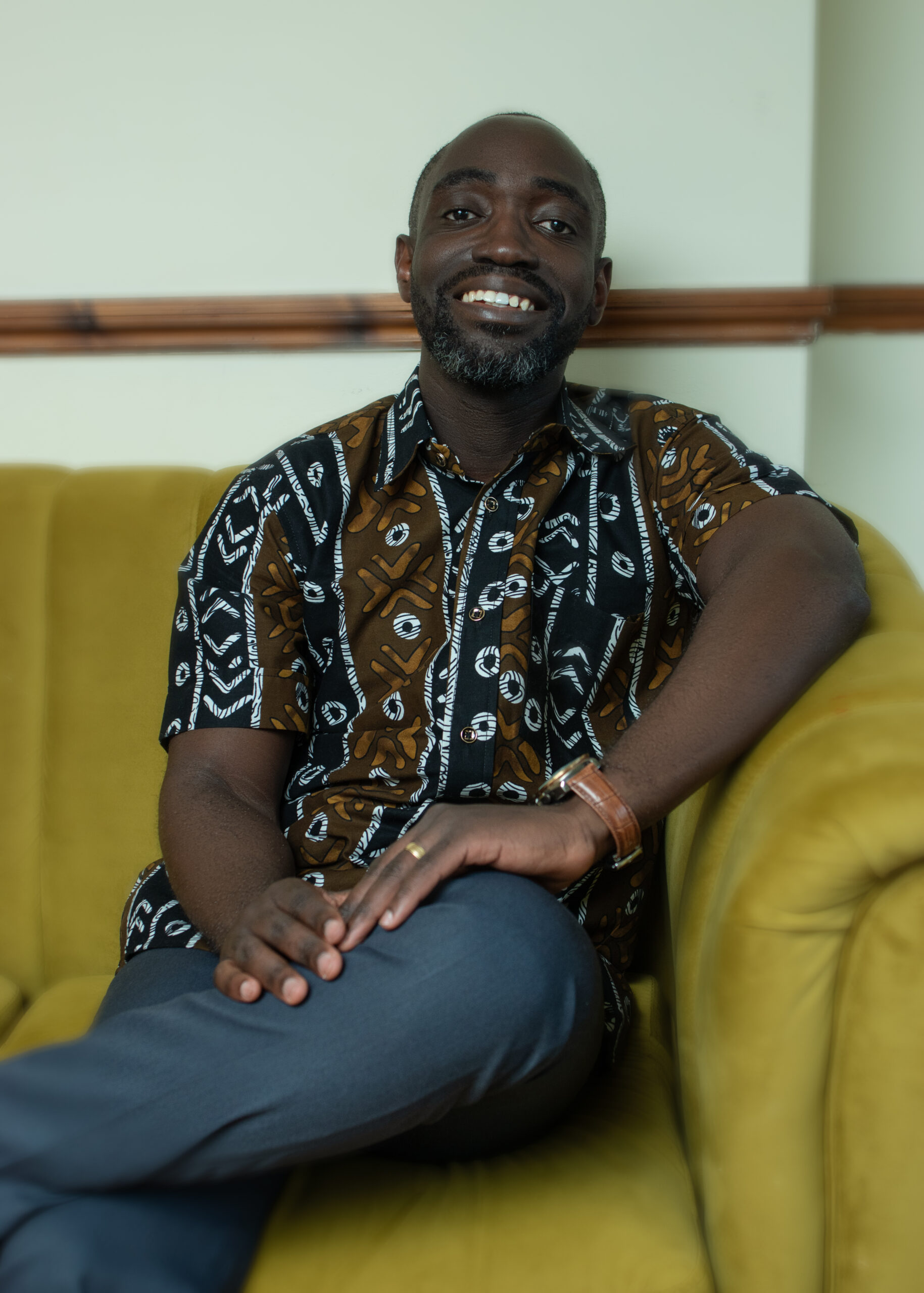
Michael Agyapong is a Ghanaian writer and the creator of Snappy Stories, a microfiction serial published on his Instagram and X platforms (@kwasi_sei). His work has appeared in The Kalahari Review and in two anthologies from the Ama Ata Aidoo Centre for Creative Writing. He has previously written under the pseudonym, Kwasi ‘Sei. He is a practising medical doctor. When he is not working, you’ll find him wrestling with his toddler and losing, or sleep-writing at night. You can engage with him at www.michaelagyapong.com. His debut novel “Where Shadows Gather” is forthcoming from Masobe Books on 13th August, 2026.