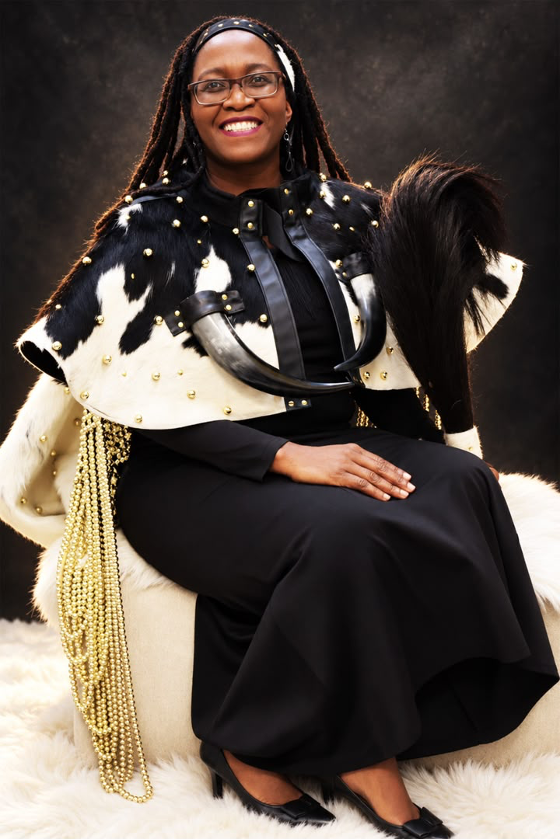
Tsitsi Nomsa Ngwenya is well-known as a writer but she is a woman whose life is a story of resilience. She has been a Town Planning Consultant of 22 years, a writer with four published books, and three more on the way. She’s featured in five anthologies. She built an empire from home as a single mother. She financed a women empowerment project in her community that earned her an invitation to Parliament. She was honoured as the SPAR Business Woman of the Year. She lost it all at 36 and yet rebuilt herself from scratch through writing.
Literary journalist Beaven Tapureta (BT) talks to Tsitsi Nomsa Ngwenya (TNN), this time not about her books but how se triumphed over life difficulties.
BT: Who is Tsitsi beyond the titles?
TNN: Beyond the titles, I am a mother first. A woman who built something from home with toddlers, who built something for my community with other women. I am the woman who lost everything and refused to disappear. I am still showing up.
BT: Why did you leave your marriage so young?
TNN: My ex-husband wanted me to quit college and be a housewife. I was not yet a fully qualified Town Planner. He was not even paying my fees or able to take care of me and the baby. I left, gave my little boy to my sister, and returned to college full time. It was hard but I did it anyway and I have no regrets. That decision gave me my profession and my independence.
BT: How did you build success as a single mother?
TNN: Focus. I just focused on me, raising my children alone, and I kept going. I failed many times in business, but I kept working harder until it worked.
BT: Tell us about that women empowerment project?
TNN: It is one of my proudest achievements. I financed the project, but my family and my community helped too — they were there as hands alongside the professionals. Together we built a 2000 square metre greenhouse for tomatoes, we drilled 2 boreholes and installed 2 by 5000 litre tanks for water, we built the fowl runs for 3000 chickens raised at 2-week age intervals, and we built a 4-bedroom project house with an office. We powered the whole business using solar and a 5.5kva generator. We grew tomatoes, raised chickens, made crafts — and we made a lot of profit. It was not just business, it was sisterhood, economic freedom, and community ownership. And that project is what earned me the invitation to Parliament in 2009.
BT: How did success look like at its peak?
TNN: Parliament at 32 because of that women empowerment project, SPAR Business Woman of the Year second runner-up at 35 in Harare, 17 properties, four income streams, respect from banks and media. I felt honoured.
BT: You say you lost it all at 36. What happened?
TNN: Two things. My own mistakes — I entertained the wrong people and trusted too much when I should have discerned — and the economic hardship Zimbabwe faced in 2008/9. Together, these forces destroyed my everything.
BT: When was your lowest moment in life?
TNN: Being in serious debt, alone, with no support, hiding in writing for three years, then rebuilding myself quietly from scratch.
BT: How did writing save you?
TNN: Writing gave me a place to heal without having to explain. It turned my pain into purpose. Being published by UNISA in 2014 proved I still had value.
BT: How did you start your company again?
TNN: In 2015, I quietly reopened only the Town Planning Consultancy. One client at a time. Writing and planning, while learning boundaries and discernment.
BT: What is your message to women who have lost everything today?
TNN: You can lose property, you can lose money, you can lose people — but if you do not lose yourself, you can start again. At any age. From any place. Even from hiding.
BT: What do you want to do in the future?
TNN: I will keep writing — I have 4 books of my own, I appear in 5 others, and I have 3 more currently in the publishing process. In business, I want to resuscitate that women empowerment project. I financed it before, my community built it with me before, we profited before, and it took me to Parliament before. This time I am going to tackle it with better strategy, boundaries, and wisdom. No hurry. My future is about building with women again, while I enjoy peace and holidaying as and when I want to.
BT: We’ve seen you traveling extensively — Europe, Kenya, Mauritius, Rwanda, and recently at the United Nations / African Union conference in Accra, Ghana. What is your role in these high-profile meetings?
TNN: My creative work is intentionally anchored in history and culture. Over time, researchers and academics have drawn upon these narratives in their scholarly work. Consequently, I am often invited to contribute a cultural and historical perspective to these vital humanitarian dialogues, such as the important discourse on the legacy of slavery we convened in Ghana.
BT: Any final word?
TNN: I showed up every day. And I am still showing up. Thank you.
BT: Tsitsi, thank you very much, for the inspiration and courage. You rose from the ashes, choosing to empower yourself over a confused marriage, to building with a baby on your back, to financing a women empowerment project with your community — greenhouse, boreholes, fowl runs, solar power — a project so impactful it earned you an invitation to Parliament. Then losing 17 properties and rebuilding from hiding through writing. You did not just rebuild a business, you rebuilt a woman. And your dream to resuscitate that women’s project proves your heart is still for others. You have reminded every woman that it is never too late to begin again. We honour you. We celebrate you. Keep reigning.